Why Does Dryer Smell Burnt? Causes and Next Steps
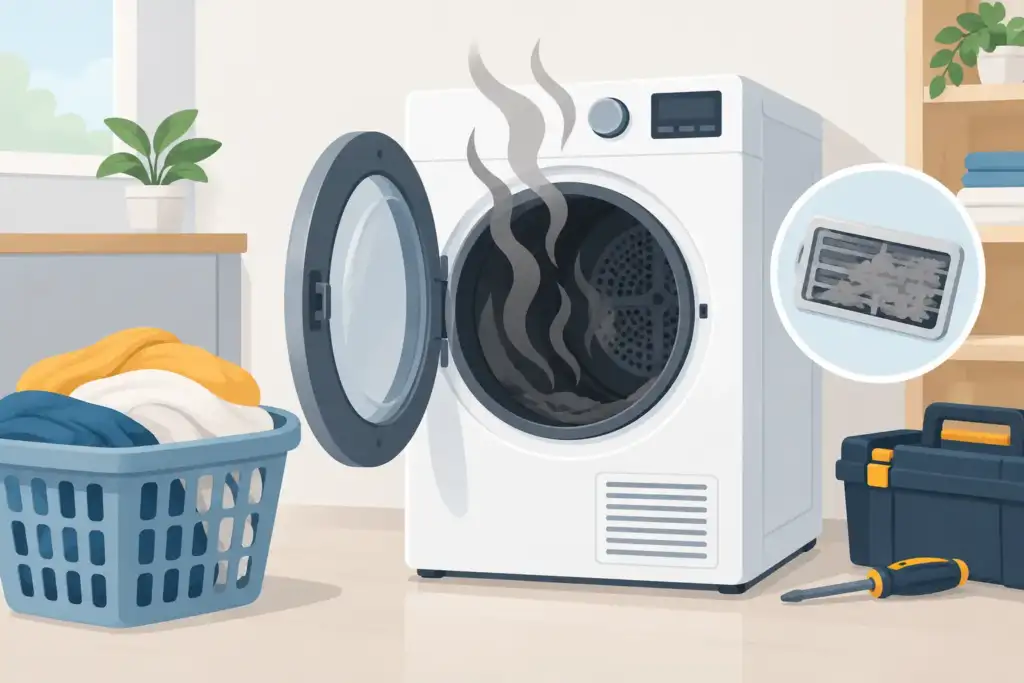
A burning smell from the laundry room is not something to ignore. If you are asking, why does dryer smell burnt, the answer can range from lint overheating in a restricted vent to an electrical or mechanical problem inside the appliance. Some causes are straightforward to address, but others require the dryer to stay off until a qualified appliance technician or dryer vent professional can inspect the system.
A dryer normally produces heat, but it should not produce a scorched, smoky, rubbery, or electrical odor. Acting quickly can help protect your clothes, your appliance, and most importantly, your home.
Why Does a Dryer Smell Burnt?
The most common reason is restricted airflow. Your dryer needs to push warm, moist air through the lint screen, ductwork, and outdoor vent cap. When lint builds up in any part of that path, heat can become trapped. The dryer works harder, clothes take longer to dry, and lint or dust near the heat source can begin to smell hot or singed.
Lint is highly flammable, which is why a burnt odor should be treated as a safety warning rather than a normal part of doing laundry. Cleaning the lint screen after every load is essential, but it does not clean the vent line behind the dryer or the exterior vent hood. Those areas can collect lint over time, especially on longer vent runs, systems with several turns, or vents that exit through a roof.
A clogged exterior vent cap can cause the same issue. Bird nests, leaves, dryer lint, and damaged flaps may prevent air from leaving the home. If the flap barely opens while the dryer is running, or no air is coming out at all, stop using the appliance until the blockage is addressed.
The Smell Can Help Point to the Problem
Not every burnt smell has the same source. Paying attention to the odor and when it occurs can give a service professional useful clues.
A dusty, scorched smell is often connected to lint, dust, or debris heating up near the lint trap, vent connection, or dryer cabinet. This may be more noticeable when the dryer has not been used for a while, but the smell should fade quickly. If it persists or becomes stronger, do not assume it is harmless.
A burning-rubber odor can indicate that a dryer belt, roller, idler pulley, or another moving part is wearing out. These parts create friction as the drum turns. A belt that slips or a roller that is failing may overheat and produce a distinct smell, sometimes along with squealing, thumping, scraping, or a drum that does not turn smoothly.
An electrical burning smell is more urgent. It may smell sharp, acrid, or similar to melting plastic. Possible causes include damaged wiring, an overheating motor, a failing heating element, or a loose electrical connection. Turn the dryer off, unplug it if it is safe to do so, and do not restart it to see whether the smell goes away. An appliance repair professional should inspect the unit.
For gas dryers, a gas odor is a separate emergency concern. Leave the area, avoid switches, flames, and electrical devices, and contact your gas utility or emergency services according to its safety guidance. A gas smell is not a dryer vent cleaning issue.
What to Do Right Away
If your dryer smells burnt, stop the cycle and let the appliance cool completely. Do not keep drying the load just because the smell seems mild. Heat, lint, and reduced airflow can turn a small warning into a serious problem.
Once the dryer is cool, take these practical steps:
- Remove the lint screen and clear away all visible lint. Wash the screen with warm water and mild dish soap if dryer-sheet residue or fabric-softener film is coating it, then let it dry fully.
- Check the area behind and beside the dryer for lint, crushed ductwork, or items resting against the appliance. Never use a thin plastic or foil-style transition duct, which can sag, trap lint, and overheat.
- Look at the outdoor vent hood while the dryer is off. Remove visible debris around the opening, but do not reach deeply into the duct or force the flap if it is stuck.
- Check the clothing load. Items contaminated with cooking oil, gasoline, solvents, or other flammable substances should never go into a dryer.
Do not open the dryer cabinet or attempt electrical repairs yourself. Modern dryers contain components that can remain hot, sharp metal edges, and wiring that requires correct testing. The safest next step depends on what you find and the type of smell you notice.
Signs the Dryer Vent May Be Clogged
A burnt smell often appears alongside other airflow problems. Your dryer vent is more likely to need professional cleaning when clothes take more than one cycle to dry, the laundry room feels unusually hot or humid, or the dryer itself becomes very hot to the touch.
Other common signs include lint collecting around the dryer connection, little to no airflow at the exterior vent cap, and a musty odor that lingers on clothes. You may also notice that the vent flap does not open fully during a cycle. These symptoms do not always mean the dryer itself is failing. They may mean the appliance cannot exhaust heat and moisture properly.
This distinction matters. Replacing a dryer because it runs hot will not solve a blocked vent line. On the other hand, cleaning a vent will not fix a failing motor or damaged heating element. A careful inspection helps identify whether the issue is in the appliance, the vent system, or both.
When to Call for Professional Help
Call for appliance repair if the smell is electrical, plastic-like, or rubbery; if you hear grinding or squealing; if the drum stops turning; or if the dryer trips a breaker. These are signs that a mechanical or electrical component may need repair or replacement.
Call for professional dryer vent cleaning when airflow is weak, drying times have increased, lint is accumulating outside the lint screen, or the outdoor vent hood is blocked. A professional service can clean the full vent path, inspect the connection behind the dryer, and identify crushed, disconnected, or poorly routed ductwork that limits airflow.
For homeowners in Northern Virginia, Washington, D.C., and Maryland, this is especially useful in townhomes, condos, and older homes where dryer vents may run a long distance through walls, ceilings, garages, or roofs. These systems can hide substantial lint buildup even when the lint screen is cleaned faithfully.
Delight Home Air Cleaning provides dryer vent cleaning focused on cleaner airflow and reduced dryer-fire risk, with clear communication and visual documentation of completed work. If the vent is the issue, a thorough cleaning can often help the dryer run more efficiently and reduce unnecessary heat in the laundry area.
How to Prevent a Burnt Dryer Smell From Returning
The best prevention is regular lint-screen cleaning and periodic dryer vent maintenance. Empty the screen before or after every load, and keep the area around the dryer free of stored boxes, cleaning products, and loose laundry. Give the appliance enough space so its connection is not crushed when it is pushed back into place.
Have the vent system checked more often if you do many loads each week, have pets that shed heavily, use dryer sheets regularly, or notice long drying cycles. Larger households and properties with long or complex vent routes may need cleaning sooner than a home with a short, straight exterior vent.
Also pay attention after renovations or exterior work. A newly painted, screened, damaged, or obstructed vent hood may reduce airflow without being obvious from inside the laundry room.
A dryer that smells burnt is asking for attention. Turn it off, avoid repeat cycles, and address the cause before the next load. A clean vent and a properly functioning dryer give your household a safer, fresher, and more reliable laundry routine.