Why Is My Chimney Smoky? Causes and Fixes
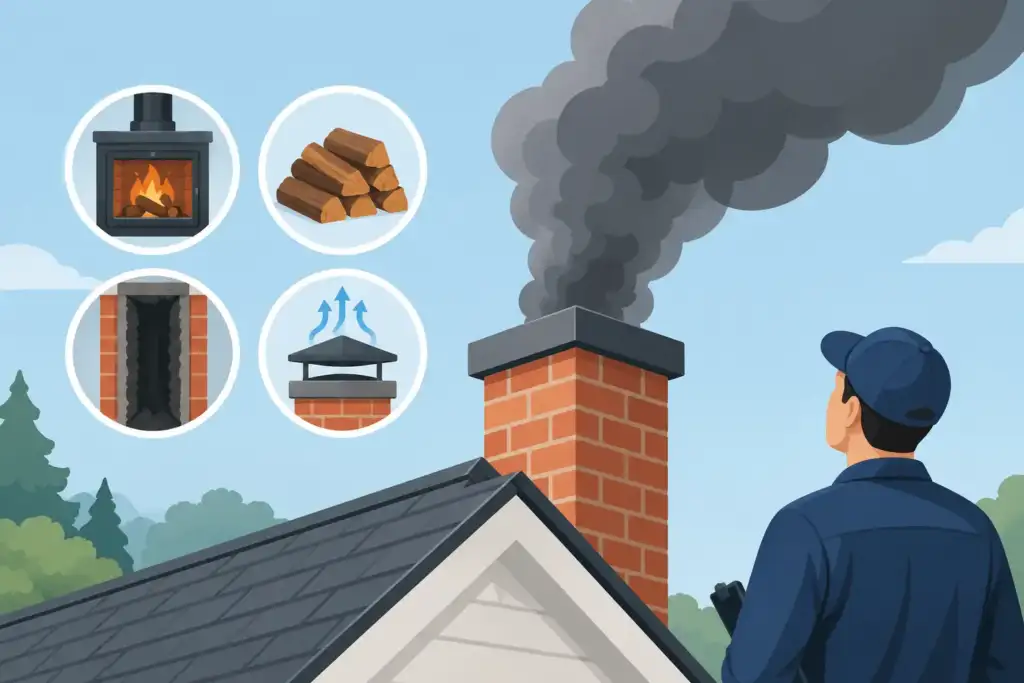
A smoky fireplace can turn a comfortable evening into a rush to open windows. If you are asking, “why is my chimney smoky,” the answer is usually related to draft, airflow, buildup, or a blockage. Smoke belongs in the firebox and should travel safely up and out of the chimney – not into your living room.
A small amount of smoke when lighting a cold fireplace can happen, especially during damp or mild weather. Persistent smoke, a strong soot odor, or smoke that worsens after the fire is burning deserves attention. Besides making a mess, fireplace smoke can affect indoor air quality and may expose your household to carbon monoxide and fine particles.
Why Is My Chimney Smoky When I Light a Fire?
A chimney works because warm air rises. The fire heats the flue, and that rising air pulls smoke from the firebox to the outdoors. This movement is called draft. When the draft is weak, blocked, or moving in the wrong direction, smoke can spill back into the room.
The timing of the problem provides useful clues. Smoke only at startup often points to a cold flue or insufficient initial heat. Smoke throughout the fire may indicate a closed damper, an obstruction, wet wood, or a chimney that needs cleaning. Smoke that appears on windy days can be related to exterior airflow around the home and chimney.
Before troubleshooting, stop using the fireplace if smoke is filling the room, anyone feels lightheaded or nauseated, or a carbon monoxide alarm sounds. Get fresh air, make sure the fire is fully extinguished if it is safe to do so, and contact a qualified professional or emergency services when needed.
Common Reasons a Chimney Smokes
The damper is closed or only partly open
This is one of the simplest and most common causes. The damper is the metal plate that opens the passage from the firebox into the flue. It must be fully open before you light the fire and remain open until ashes are completely cool.
Damper handles and controls vary by fireplace, so do not rely only on the handle position. With the fireplace cold, look upward with a flashlight if you can safely do so. A professional can inspect a damper that is difficult to operate, warped, stuck, or damaged.
The flue is cold and air is flowing downward
On a cold day, the chimney may be filled with cold, heavy air. In some homes, that air moves down the flue and into the firebox. When you light a fire immediately, the smoke must fight against that downdraft before it can rise.
You may notice a chilly flow of air or a smoky smell before the fire begins. A small, controlled starter fire with dry kindling can gradually warm the flue. Never use flammable liquids, and do not burn large amounts of paper in an attempt to force a draft. If the downdraft happens often, an inspection can identify whether the chimney design, cap, or nearby airflow is contributing to the issue.
Soot, creosote, or debris is restricting the flue
Every wood-burning fireplace produces soot. Creosote, a sticky and combustible residue, also forms when wood smoke cools inside the flue. Over time, buildup narrows the path smoke needs to travel. Leaves, twigs, animal nests, and loose masonry debris can create an even more immediate obstruction.
A chimney can look fine from the hearth while having significant buildup farther up the flue. That is why a professional chimney cleaning includes more than sweeping visible ash from the firebox. The flue, smoke chamber, damper area, and accessible components should be checked for conditions that affect safe airflow.
The chimney cap is missing or damaged
A chimney cap helps keep rain, leaves, birds, and small animals out of the flue. Without one, debris and nesting material can collect where you cannot see it. A damaged cap or a screen clogged with soot can also restrict exhaust.
There is a trade-off here: a properly sized cap protects the chimney, while an incorrectly fitted or heavily clogged cap can interfere with draft. A technician can check that the cap is clear, secure, and appropriate for the chimney.
You are burning wet or unsuitable wood
Firewood that has not been properly seasoned contains excess moisture. Instead of burning hot and cleanly, it hisses, smolders, produces more smoke, and creates more creosote. Wood should be dry, stored off the ground, and protected from rain while still allowing airflow.
Avoid burning painted, treated, glued, or manufactured wood products unless they are specifically made for indoor fireplaces. These materials can release harmful fumes and leave residues in the chimney. Even with good wood, a fire that is starved of oxygen will smoke more than one that burns steadily.
The house is competing with the fireplace for air
Modern homes can be tightly sealed, which helps with energy efficiency but sometimes makes fireplaces harder to operate. Kitchen range hoods, bathroom fans, clothes dryers, and some HVAC systems can pull indoor air out of the house. Replacement air may then come down the chimney, reversing the draft.
If your fireplace gets smoky when an exhaust fan or dryer is running, turn those appliances off before using the fireplace. Opening a nearby window slightly may help confirm that the home needs more makeup air. This is a useful clue, not a permanent solution. A qualified chimney professional can help determine whether ventilation changes or a fireplace-specific solution is needed.
Wind, weather, and chimney height affect draft
Wind does not always improve chimney performance. Depending on the roofline, nearby trees, neighboring buildings, and chimney height, wind can push air down the flue. Mild outdoor temperatures can also reduce the difference between warm indoor air and cool outdoor air that supports normal draft.
A chimney that is too short relative to the roof may struggle in certain conditions. Correcting a height or termination problem is not a DIY project. Changes need to be evaluated carefully for safety, local requirements, and the specific structure of your home.
Safe Checks You Can Make Before Scheduling Service
Start with the basics when the fireplace is completely cool. Confirm the damper opens fully, remove excess ash from the firebox, and look for obvious leaves or nesting materials around the chimney cap from the ground. Do not climb onto the roof or reach deep into the flue.
Use only dry, seasoned firewood and build a modest fire with adequate kindling and airflow. Keep fireplace doors open or closed according to the manufacturer’s instructions for your specific unit. Traditional open fireplaces, wood stoves, inserts, and gas fireplaces have different operating requirements.
Also pay attention to patterns. Does smoke occur only during rainy weather? Does it start when the kitchen hood is on? Is there a strong odor even when no fire is burning? Notes like these help a chimney technician diagnose the root cause more efficiently.
When to Call for Professional Chimney Cleaning
Schedule an inspection and cleaning if you see soot falling into the firebox, notice thick black or tar-like deposits, smell persistent smoke, or have not had the chimney serviced recently. You should also call if animals may be inside the flue, the damper will not operate correctly, or smoke enters the room during normal fireplace use.
Homeowners in Northern Virginia, Washington, D.C., and Maryland often use fireplaces seasonally, which makes it easy to overlook maintenance until the first cold evening. Having the chimney checked before regular winter use can help identify buildup, blockages, cap concerns, and draft issues before they affect your home.
A professional service should explain what was found, provide clear recommendations, and show you the results when possible. Delight Home Air Cleaning uses careful, professional cleaning practices and can document before-and-after conditions so homeowners have a clearer picture of their chimney’s maintenance needs.
A fireplace should add warmth to your home, not smoke, odors, or uncertainty. If basic checks do not restore a clean draft, pause fireplace use and arrange a professional chimney evaluation. Addressing the cause early helps protect cleaner indoor air and gives you more confidence when you light the next fire.