How to Prevent Dryer Overheating at Home in Fairfax County
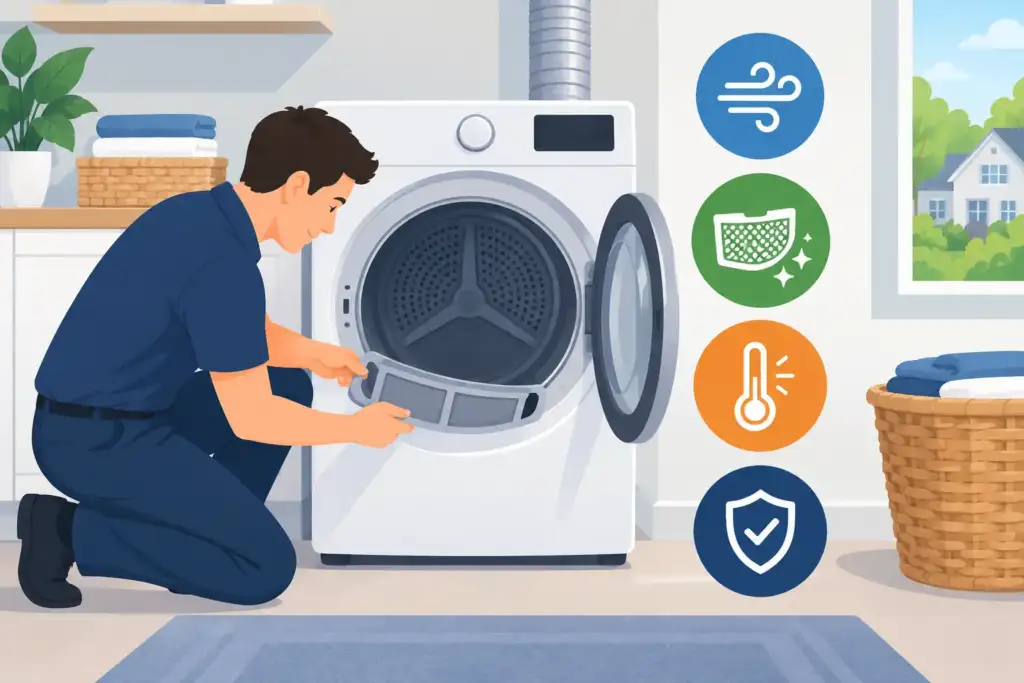
A dryer that feels unusually hot, takes two or three cycles to dry one load, or leaves a burning smell in the laundry room is not just frustrating. It can be a warning that heat and lint are building up where they should not. Knowing how to prevent dryer overheating helps protect your appliance, lower wasted energy use, and reduce a serious household fire risk.
Most overheating problems are caused by restricted airflow. Your dryer needs a clear path to push warm, moist air outdoors. When lint, crushed ductwork, a blocked exterior vent cap, or an appliance issue slows that airflow, heat stays inside the dryer and vent system. The dryer then works harder, clothes dry more slowly, and components can wear out sooner.
Why dryers overheat
Every load creates lint, even when you clean the lint screen. Fine fibers pass through the screen and collect in the dryer cabinet, transition hose, vent pipe, and exterior vent hood over time. Long vent runs, multiple turns, and vents that terminate on a roof can collect lint faster and are harder to inspect.
Dryers can also overheat because the vent hose behind the machine is kinked or crushed when the dryer is pushed back into place. Flexible plastic or foil-style ducts are especially likely to sag, tear, or trap lint. A smooth metal transition duct is generally the safer choice because it supports stronger airflow and is less likely to hold debris.
Sometimes the cause is inside the appliance rather than the vent. A failing thermostat, heating element, blower wheel, or moisture sensor can create unsafe operating conditions. That is why a persistent overheating issue deserves attention, even if the vent looks clean from the outside.
How to prevent dryer overheating with routine care
Start with the habit that makes the biggest difference: clean the lint screen before every load. Pull the screen out, remove lint with your fingers, and reinstall it fully before starting the dryer. Do not run a load without the screen in place.
Once a month, wash the screen with warm water and mild dish soap. Dryer sheets and fabric softeners can leave an invisible film that restricts airflow through the screen. Gently scrub both sides with a soft brush, rinse it well, and let it dry completely before putting it back. If water pools on the screen rather than passing through it, residue may be present.
Give the area around the dryer some attention as well. Vacuum lint from the floor, behind the appliance, and around the base of the machine. Keep stored boxes, cleaning supplies, paint, and other flammable materials away from the dryer. A laundry room should have room for air to circulate and for you to reach the dryer safely.
Avoid overloading the drum. A tightly packed load blocks air movement through fabrics, which makes the dryer work longer and hotter. Separate heavy towels, bedding, and bulky items from lighter clothing when practical. This small adjustment can improve drying performance and put less strain on the appliance.
Check the vent path, not only the lint screen
The lint screen is only the first line of defense. The full dryer vent system needs to carry air outside quickly and freely.
With the dryer running, step outside and check the exterior vent hood. You should feel a steady flow of warm air, and the damper should open. If airflow feels weak, the flap does not open, or lint is collecting around the hood, stop using the dryer until the restriction is addressed. A bird nest, insect nest, damaged cover, or lint buildup can block the exterior outlet.
Look behind the dryer carefully. The transition duct should not be flattened, sharply bent, disconnected, or crushed against the wall. If moving the dryer is difficult or the vent connection is loose, do not force it. Damaging the duct can make the problem worse.
Be cautious with exterior vent covers that use fine mesh screens. While they may seem useful for keeping pests out, mesh can catch lint and clog quickly. A properly designed dryer vent cap should allow the damper to open during operation while helping keep weather and animals out.
Warning signs that should not wait
A dryer usually gives homeowners clues before a complete blockage or equipment failure develops. Pay attention if you notice any of these signs:
- Clothes remain damp after a normal cycle or need repeated cycles to dry.
- The laundry room feels hotter or more humid than usual while the dryer runs.
- The dryer cabinet, clothing, or lint screen feels excessively hot.
- You smell something burning, notice smoke, or see scorching around the dryer.
- The exterior vent flap stays closed or produces very little airflow during a cycle.
If you smell burning, see smoke, or suspect a fire, turn the dryer off immediately if it is safe to do so, unplug it, and contact emergency services as needed. Do not restart the dryer to see whether the smell goes away.
For slower drying and weak airflow without an immediate emergency, pause use until the vent system can be inspected and cleaned. Continuing to dry laundry through a blockage can damage the dryer while allowing lint and heat to accumulate.
When professional dryer vent cleaning makes sense
Homeowners can handle lint-screen care and visible cleanup, but most vent systems require more than a quick look from outdoors. Lint may be packed several feet into the duct, lodged at an elbow, or collected in a long concealed run through walls, ceilings, or crawl spaces.
Professional dryer vent cleaning is especially helpful if your dryer takes longer to dry, your vent run is long or complex, you recently moved into a home with an unknown maintenance history, or the exterior outlet is difficult to reach. It is also a smart preventive service for busy households that run frequent loads, especially families with children, pets, towels, athletic uniforms, or bedding in regular rotation.
A thorough service should address the accessible vent path from the dryer connection to the exterior termination, not just remove surface lint near the opening. Ask for clear upfront pricing and visual documentation when available. Before-and-after photos or video can help you see the condition of the vent and understand the work completed.
For homes in Northern Virginia, Washington, D.C., and Maryland, Delight Home Air Cleaning provides professional dryer vent cleaning focused on safer airflow, cleaner ventilation, and dependable results. A trained technician can identify common restrictions, help spot damaged vent connections, and remove buildup that ordinary household cleaning cannot reach.
Do not overlook dryer installation and appliance repair
Cleaning the vent will not solve every overheating problem. If airflow is strong and the dryer still becomes excessively hot, shuts off unexpectedly, trips a breaker, or produces unusual noises, the appliance may need a qualified repair technician. Internal components, electrical connections, and gas dryer systems require specialized diagnosis.
Installation matters, too. A dryer should be properly connected, level, and positioned with enough space to avoid crushing the vent. The vent route should be as short and straight as the home layout reasonably allows. Every unnecessary bend adds resistance, so a long route with several elbows may need more frequent maintenance than a short, direct one.
If you are replacing a dryer, do not assume the existing duct is ready for the new unit. Have the vent connection and exterior cap checked before installation. A new appliance can still overheat when attached to an obstructed or poorly configured vent system.
Make dryer safety part of home maintenance
The best prevention plan is consistent rather than complicated. Clean the lint screen every load, wash it regularly, keep the area around the dryer clear, and watch for changes in drying time or airflow. Schedule professional vent cleaning on a routine basis that fits your household’s dryer use and the complexity of your vent system.
A dryer should dry a normal load efficiently without making the laundry room feel like a sauna. When it cannot, treat that change as a maintenance signal, not something to work around. Addressing airflow early keeps laundry moving, helps the appliance last longer, and gives your home one less hidden fire risk to worry about.