Dryer Vent Cleaning Near Me in Vienna, VA
A dryer that takes two or three cycles to finish a normal load is not simply frustrating. It can be a sign that hot, moist air and lint are struggling to leave the house. If you are searching for dryer vent cleaning near me in Vienna, VA, you may already be noticing longer dry times, a warm laundry room, or a dryer that feels unusually hot to the touch. Those are practical reasons to schedule service before a small airflow problem becomes a bigger safety and appliance issue.
Dryer vents are easy to forget because most of the ductwork sits behind walls, above ceilings, or along the exterior of the home. Yet every load of laundry sends lint into that path. The dryer’s lint screen catches a portion of it, but fine lint can still move past the screen and collect inside the transition hose, vent line, exterior cap, and bends along the route outside.
When Dryer Vent Cleaning Near Me in Vienna, VA Is Urgent
No homeowner needs to panic over one damp towel. But consistent changes in dryer performance deserve attention. A blockage limits exhaust airflow, which means the dryer must work harder and run hotter to do the same job. That can waste energy, add wear to the appliance, and raise the risk associated with lint buildup near heat.
Pay close attention if clothes take longer than one normal cycle to dry, especially heavier items such as towels and bedding. A burning smell, visible lint around the dryer or exterior vent hood, excessive heat in the laundry area, or a vent flap that barely opens during operation are also reasons to act promptly. If the dryer shuts off unexpectedly or displays overheating-related messages, stop using it until the cause has been checked.
Homes in Vienna can have very different dryer vent layouts. A first-floor laundry room may have a relatively short run to an exterior wall. A laundry closet in a townhouse, condominium, or larger home may have a longer vent route with multiple turns. Longer runs and sharp bends tend to collect lint faster, so the right cleaning schedule depends on the system as well as how often your household does laundry.
Why Cleaning the Lint Screen Is Not Enough
Cleaning the lint screen after every load remains one of the best habits for dryer safety and performance. It does not, however, clean the entire exhaust system. Fine fibers can pass through the screen, settle in the duct, and combine with moisture or dust to form a dense buildup.
Dryer sheets, fabric softener residue, and certain laundry products can also leave a nearly invisible film on the lint screen. When that screen becomes coated, airflow through it can be reduced even when it looks clean. Washing the screen periodically with warm water, mild dish soap, and a soft brush can help. Let it dry completely before reinstalling it.
The vent line beyond the dryer needs a different approach. Reaching only as far as the hose behind the appliance may leave the majority of the route untouched. Professional equipment is designed to remove accumulated lint through the full accessible vent path while avoiding damage to the ductwork.
What Professional Dryer Vent Service Should Include
A quality dryer vent cleaning appointment should begin with an assessment of the system, not a rushed pass with a household vacuum. The technician should identify the vent route, inspect accessible connections, and look for conditions that affect airflow, such as crushed transition hoses, disconnected sections, excessive bends, nesting material, or an exterior cap that is blocked or not opening properly.
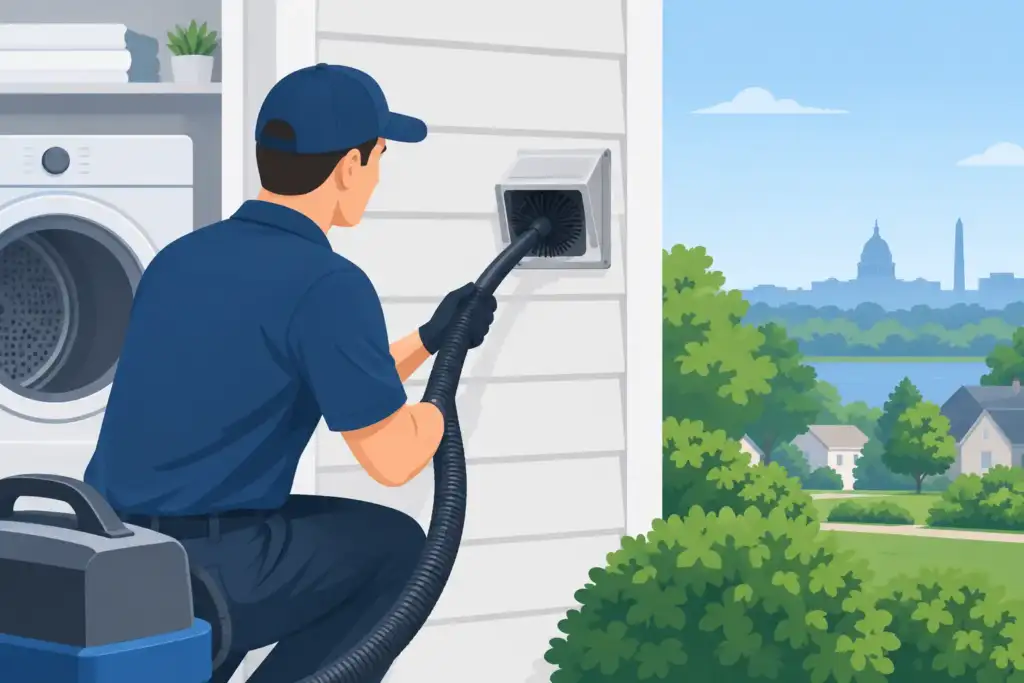
The cleaning process then removes lint and debris from the vent line using the right tools for the layout. Depending on the system, that may involve specialized rotary brushing and high-powered vacuum equipment. The goal is to clear the path from the dryer connection to the exterior termination point, not simply remove lint visible near the appliance.
Afterward, the system should be checked for improved airflow and proper exterior operation. Before-and-after photos or video can be particularly useful because much of the work happens where homeowners cannot see it. Clear documentation gives you a better picture of what was found and what was removed.
A trustworthy local provider should also explain any issue that cleaning alone cannot fix. For example, a damaged vent cap, an unsafe plastic or foil connector, or a crushed hose may need replacement. Those recommendations should be specific and easy to understand, with transparent pricing discussed before additional work begins.
How Often Should a Dryer Vent Be Cleaned?
For many homes, annual dryer vent cleaning is a sensible baseline. The ideal frequency can be shorter if you have a large family, wash and dry clothes often, have pets that shed, regularly dry bulky loads, or use a long and winding vent route. Shared laundry areas and light-commercial settings may also need more frequent attention because of their higher use.
On the other hand, a smaller household with a short, straight vent may not build up lint at the same rate. The important point is to respond to performance changes instead of waiting for a calendar reminder. When drying times climb, the vent flap stops opening normally, or the laundry room feels hot and humid, it is time to have the system evaluated.
It also helps to consider the condition of the exterior vent cover. Leaves, landscaping debris, snow, and animal nesting materials can interfere with exhaust at the final exit point. A proper cap should allow air to leave while helping keep unwanted debris and pests out.
Choosing a Local Dryer Vent Cleaning Company
Price matters, but the lowest advertised number does not always reflect the service your vent system needs. Ask what is included in the quoted price and whether the provider will clean the full vent line, inspect accessible connections, and verify airflow afterward. Be cautious of vague offers that cannot explain the cleaning method or that add surprise fees after arriving.
Experience and care matter, too. Moving a dryer or accessing a vent connection requires attention to the appliance, flooring, walls, and gas line if the home has a gas dryer. A professional team should arrive on time, treat the home respectfully, communicate what they find, and leave the work area clean.
For Vienna homeowners, choosing a responsive local company can make follow-up and scheduling easier. Delight Home Air Cleaning provides dryer vent service with straightforward communication, modern cleaning equipment, and visual proof of completed work. The focus is practical: cleaner venting, better airflow, and a safer, better-maintained laundry area.
Simple Habits That Help Between Appointments
There is no substitute for a thorough vent cleaning, but a few routine habits can reduce buildup between visits. Clean the lint screen before or after every load, and avoid running the dryer when you notice a concerning smell or excessive heat. Keep the area around the appliance free of loose lint, stored boxes, and clutter so the dryer has room to operate properly.
Check the exterior vent hood while the dryer is running. You should generally see the flap open and feel warm air moving out. If it remains closed, airflow is weak, or lint is collecting around the outlet, schedule an inspection rather than trying to force the flap open or push tools deep into the duct yourself.
A clean dryer vent is one of those home maintenance tasks that pays off quietly: laundry gets easier, the appliance does not have to work as hard, and your household has one less avoidable safety concern. If your dryer has started sending warning signs, scheduling a professional cleaning now can bring back the airflow your home depends on.