Why Musty Vent Odors Keep Returning at Home
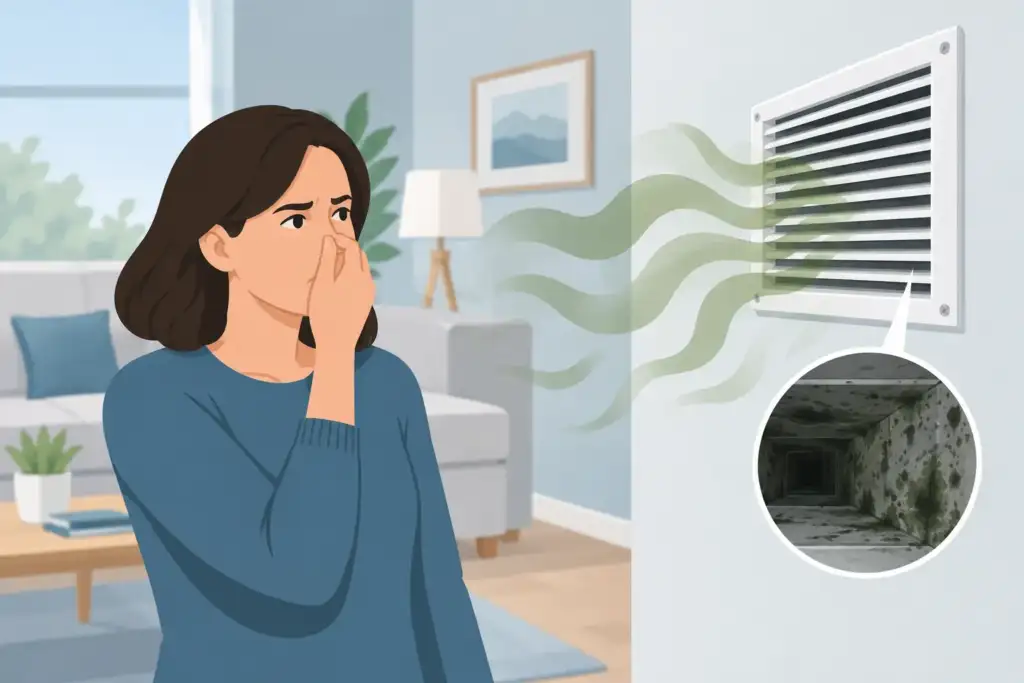
A musty smell that appears when your heat or air conditioning turns on is more than an annoyance. Musty vent odors can point to trapped moisture, built-up debris, a drainage issue, or a part of the HVAC system that needs attention. The source is not always serious, but ignoring a recurring odor can make your home feel less clean and may allow a small maintenance problem to grow.
For homeowners, the useful question is not simply, “How do I cover up the smell?” It is, “When does the smell occur, where is it strongest, and what changed?” Those details help narrow down whether you are dealing with ordinary dust, excess humidity, dirty ductwork, or an issue that calls for an HVAC technician.
What Causes Musty Vent Odors?
The classic musty odor usually develops when moisture meets organic material such as dust, lint, insulation fibers, or residue on HVAC components. In Northern Virginia, Maryland, and Washington, D.C., humid summers and damp basements can make that combination especially common.
A system that has been off for a while may smell stale during the first few minutes of operation because dust has settled in the vents or on the equipment. That smell may fade quickly. A persistent damp, earthy, or mildew-like odor is different. It deserves a closer look, particularly if it is stronger when the air conditioner runs.
Condensation around the cooling system
Your air conditioner removes humidity from indoor air. That moisture collects on the evaporator coil and drains away through a condensate pan and drain line. When the drain line is clogged, the pan holds standing water, or the coil stays dirty and wet, odors can develop and circulate through the home.
This is often the first place to investigate when the odor appears only in cooling mode. You may also notice water near the indoor unit, unusually high indoor humidity, or a system that seems to run longer than usual. A licensed HVAC professional should address mechanical and drainage issues rather than leaving them to chance.
Dust and debris in ductwork
Air ducts naturally collect dust over time. Pet hair, construction residue, pollen, and household particles can settle inside return ducts and supply runs. If humidity gets into that debris, it can create the stale smell many homeowners describe as “old basement” or “wet cardboard.”
Duct cleaning is not a cure for every indoor air issue. It is most useful when there is visible buildup, dust blowing from registers, recent remodeling, pest-related debris, or a confirmed odor source in the duct system. A professional inspection should focus on the full picture instead of promising that cleaning alone will solve a drainage or equipment problem.
Moisture in a basement, crawl space, or nearby room
Sometimes the vent is only carrying an odor from another area. Return vents pull air back to the HVAC system, so a damp basement, utility closet, crawl space, or laundry area can influence the air moving through the house.
If one return grille smells noticeably worse than the others, inspect the surrounding space. Look for damp carpeting, plumbing leaks, wet insulation, condensation on pipes, or signs of water intrusion. Lowering the humidity and correcting the moisture source are more effective than adding fragrance to the vents.
Dirty filters and neglected components
A clogged air filter does not usually create a strong musty smell on its own, but it can contribute to poor airflow and allow more dust to settle within the system. Filters should be changed on the schedule recommended for your household and equipment. Homes with pets, allergies, renovation dust, or frequent system use may need more frequent changes.
The blower compartment, coil, drain pan, and accessible return areas also need periodic attention. These are working parts of your home’s air system, not places where moisture and debris should be allowed to sit year after year.
When Musty Vent Odors Need Fast Attention
A mild odor after a long period without using the system may disappear once dust clears. That is one situation where monitoring makes sense. Still, some warning signs should move the issue higher on your maintenance list.
Schedule an inspection promptly if the smell is persistent, becomes stronger, or is concentrated in one room. You should also act quickly if you see water around HVAC equipment, visible dark or fuzzy growth near vents, wet insulation, repeated condensate drain clogs, or a sudden increase in allergy-like irritation while at home.
Do not assume every dark mark is mold, and do not disturb suspected growth unnecessarily. Mold identification and moisture remediation may require the appropriate specialist. What matters first is stopping the moisture that allows growth to continue.
A burning, electrical, chemical, or rotten-egg smell is not a typical musty-odor problem. Turn off the system if it is safe to do so and contact the proper HVAC, utility, or emergency service provider based on the odor and situation.
What You Can Check Before Calling for Service
Homeowners can do a few simple checks without taking apart the HVAC system. Start by noticing whether the odor occurs with cooling, heating, or both. Then check the filter and replace it if it is overdue or visibly loaded with dust.
Walk through the home while the system is running. Compare supply vents, which blow conditioned air out, with return vents, which pull air in. This can help you identify whether the smell is widespread or tied to one section of the home.
You can also look around the indoor HVAC unit for obvious water, a wet floor, or a drain line backup. Keep the area around the equipment clear so air can move freely, and use a dehumidifier in a persistently damp basement if appropriate. These steps may reduce moisture, but they are not a substitute for repairing leaks or drainage problems.
Avoid spraying perfumes, disinfectants, or heavy deodorizers into registers. They can mask the evidence technicians need to find the source, and they may leave additional residue in the ducts. Likewise, do not use a vacuum hose deep inside ductwork or attempt to clean an evaporator coil yourself. Ducts can be damaged, and sensitive HVAC components need the right tools and methods.
How Professional Cleaning and Inspection Help
The right service depends on the source of the odor. If an HVAC inspection identifies a clogged drain, dirty coil, or equipment issue, that should be corrected first. If the system is mechanically sound but the ducts contain heavy dust, debris, or odor-holding buildup, professional air duct cleaning can be a practical next step.
A thorough duct cleaning service should address accessible supply and return ductwork, registers, and key system areas as appropriate for the equipment. It should not rely on a quick spray or vague claims. Ask what will be cleaned, how the work will be documented, and whether the price is explained upfront.
Delight Home Air Cleaning provides before-and-after visual documentation so homeowners can see the condition of the areas being cleaned. That visibility matters when you are investing in the cleanliness of a system hidden behind walls and ceilings.
Dryer vent cleaning is also worth keeping on a regular maintenance schedule, but it serves a different purpose. A clogged dryer vent is primarily a fire-risk and airflow concern. It may produce stale odors if lint and moisture are trapped, yet it should not be confused with the ductwork that distributes heating and cooling air through your home.
Keeping the Smell From Coming Back
Once the source is corrected, prevention is mostly about moisture control and routine maintenance. Replace filters consistently, keep indoor humidity at a comfortable level, and have the HVAC system serviced according to the manufacturer’s guidance. After a leak, flood, or renovation, do not wait for a smell to tell you there is debris or moisture inside the ventilation system.
If your home has a damp lower level, make that space part of your air-quality plan. Sealing water entry points, repairing plumbing leaks, improving drainage, and using dehumidification when needed can protect more than the basement. They can improve the air that returns to your HVAC system every day.
A fresh-smelling home should not depend on candles or room sprays. When musty vent odors keep returning, a careful inspection and a clear plan can get you closer to what matters: cleaner air, better airflow, and confidence that the system serving your home is being properly maintained.