Air Purifier Versus Duct Cleaning Compared
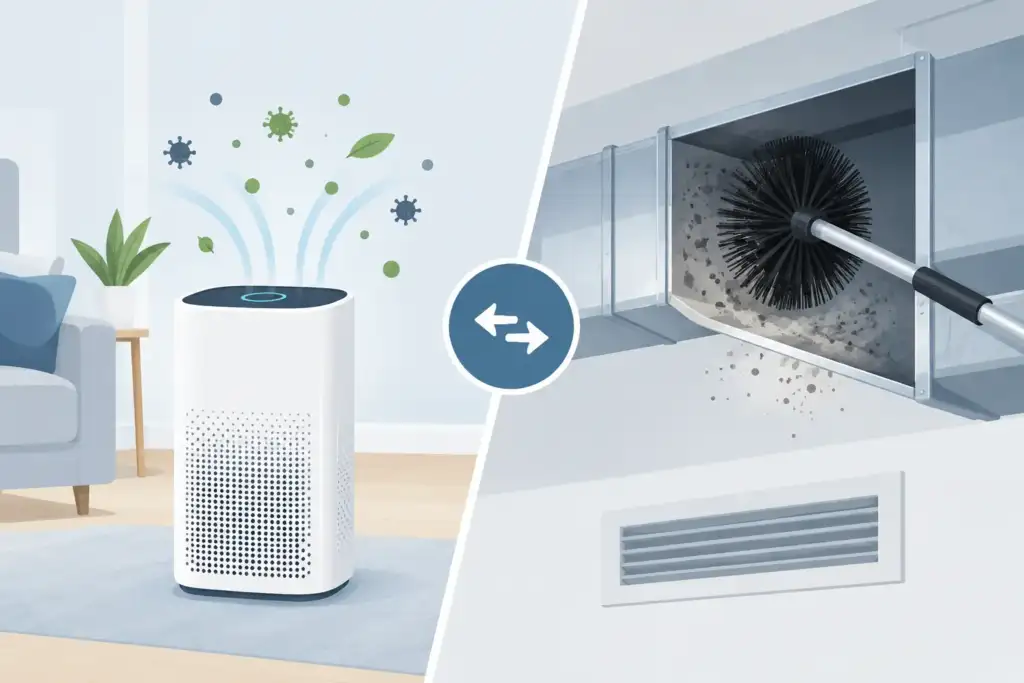
A purifier can collect airborne particles in the room where it runs. Duct cleaning removes built-up dust and debris from the passages that move heated and cooled air through your home. That difference is the heart of the air purifier versus duct cleaning decision – and it can save homeowners from paying for the wrong solution.
If your family notices dust settling quickly, stale airflow from certain vents, or allergy symptoms that seem worse at home, it is reasonable to want cleaner air fast. But a portable purifier and a professional duct cleaning service solve different problems. In some homes, using both makes sense. In others, one is clearly the better place to start.
Air Purifier Versus Duct Cleaning: The Main Difference
An air purifier is an appliance that cleans the air currently moving through a room. Depending on the unit and filter, it may capture particles such as pollen, pet dander, dust, smoke particles, and some airborne allergens. It is most useful when placed in an occupied area, such as a bedroom, nursery, living room, or office.
Duct cleaning is a maintenance service for the HVAC system. A trained technician uses specialized equipment to remove accumulated dust, debris, and other contaminants from accessible supply ducts, return ducts, registers, and related system components. The goal is not to filter a room minute by minute. It is to clean the pathways your central heating and cooling system uses every day.
Put simply, a purifier works on the air around you now. Duct cleaning addresses material already sitting inside the ventilation system.
When an Air Purifier Is the Better Choice
A quality purifier can be a practical addition when the issue is primarily airborne and limited to certain rooms. For example, a household with seasonal allergies may place a properly sized HEPA-style purifier in the main bedroom. Someone living near traffic or dealing with occasional outdoor smoke may also appreciate the extra filtration while windows are closed.
Purifiers are especially helpful because they are immediate and targeted. You can plug one in, select the appropriate setting, and begin filtering the air in that space. They can also be useful in homes without central HVAC or in areas that do not receive strong airflow from the main system.
Still, placement and sizing matter. A small purifier in a large open floor plan will not perform like a whole-home solution. A unit in the living room will not clean the air in every bedroom behind closed doors. Filters also need regular replacement. A neglected purifier with a loaded filter may run, but it will not deliver its intended results.
An air purifier also cannot remove dust, construction debris, pet hair, or other buildup already inside the ducts. It may reduce what is floating in one room, but it does not clean the source when the HVAC system itself needs attention.
When Professional Duct Cleaning Makes More Sense
Duct cleaning is worth considering when there are visible or practical signs that your ventilation system has collected more than normal household dust. This is common after remodeling, a move into a previously occupied home, pest activity, water-related concerns, or years of deferred HVAC maintenance.
You may benefit from a professional inspection and cleaning if you notice several of these conditions:
- Dust or debris is visible around supply registers or inside accessible vent openings.
- Airflow seems weaker from vents that once performed well.
- A recent renovation created fine dust that may have entered the return system.
- There has been pest evidence, unusual debris, or a musty odor when the system runs.
- You are moving into a home with an unknown maintenance history.
Cleaning is not a substitute for solving an active moisture problem, damaged ductwork, or a failing HVAC component. If mold is suspected, the moisture source must be corrected first. If airflow is poor because of a mechanical issue, a qualified HVAC professional may need to inspect the equipment. A reliable duct cleaning company should explain what it sees rather than promise that cleaning alone will fix every indoor air issue.
For homes in Northern Virginia, Washington, D.C., and Maryland, seasonal heating and cooling use can keep air moving through the same system for much of the year. A clean, well-maintained ventilation system supports better airflow and gives homeowners a clearer picture of the condition of their ducts.
What Duct Cleaning Can and Cannot Do
Professional duct cleaning can remove built-up debris from the duct system and help improve cleanliness around vents. When dust accumulation is restricting passageways or circulating from neglected ducts, the result may be fresher-feeling airflow and less visible dust near registers. Many homeowners also value before-and-after photos or video because they can see the work completed inside areas that are normally hidden.
However, duct cleaning does not turn a home into a dust-free environment. Dust comes from daily life: people, pets, fabrics, cooking, outdoor air, and normal household activity. It will continue to collect, even in a carefully cleaned house.
It also does not replace routine HVAC filter changes. Your central air filter is the first line of defense for the system. Use the filter type recommended for your equipment, install it correctly, and replace it on schedule. A clogged filter can reduce airflow and place unnecessary strain on HVAC equipment, even if the ducts were recently cleaned.
Can You Use Both?
Yes. In many homes, duct cleaning and air purification work well together because they handle separate parts of the indoor-air picture.
Consider a family that has just completed a kitchen renovation. A thorough duct cleaning may be appropriate if drywall dust and construction debris entered the return vents. Afterward, a purifier in a bedroom can provide added filtration during allergy season or while a family member is sleeping. One service maintains the central system; the other provides room-level support.
The same approach can help households with pets. Duct cleaning can address accumulated debris in the ventilation pathways when there is a genuine need, while a purifier can capture airborne dander in frequently used rooms. Neither option eliminates the need for regular vacuuming, dusting, grooming, and filter replacement, but together they can support a cleaner home environment.
How to Decide Where to Spend First
Start by identifying the problem rather than choosing the product or service first. If your concern is a dusty bedroom, pollen, or particles in one occupied room, an appropriately sized air purifier may be the simplest first step. If the concern appears when your furnace or air conditioner turns on, or if you see buildup around vents and have not maintained the system in years, duct cleaning deserves a closer look.
Also consider the age and history of the home. A recently purchased house, a home after major construction, or a property with evidence of neglected ventilation maintenance may call for a more thorough system cleaning. On the other hand, a newer home with clean vents and a well-maintained HVAC system may get more value from upgrading filter habits and using a purifier in key rooms.
Before booking any service, ask what is included. Clear, upfront pricing and visual documentation help you understand the condition of the ducts and the work performed. At Delight Home Air Cleaning, that straightforward approach matters: homeowners should see the results and feel comfortable asking questions before work begins.
Do Not Forget the Other Ventilation Maintenance Needs
Indoor air concerns can overlap with safety and appliance performance. A clogged dryer vent can make laundry take longer, force the dryer to work harder, and increase fire risk. A chimney that has not been inspected or cleaned may also need attention before the heating season. These are different systems from HVAC ducts, but they are all part of maintaining a cleaner, safer home.
The best next step is the one that matches what you are seeing and smelling in your home. Choose a purifier for focused, ongoing room filtration. Choose duct cleaning when the ventilation system itself shows signs of buildup or neglect. When you address the right source, cleaner air feels less like a guess and more like good home maintenance.