Duct Cleaning: Signs Your Home Needs It Now
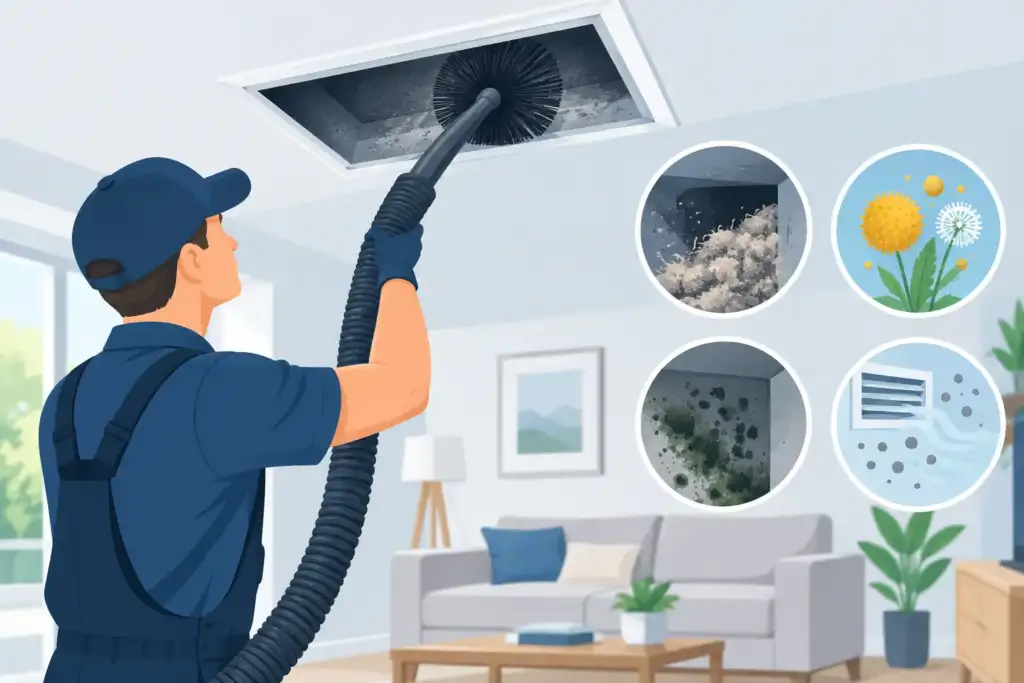
If you dust the same surfaces every few days, notice weak airflow from certain vents, or smell a stale odor when the heat or AC turns on, duct cleaning may be worth considering. Your home’s ductwork is hidden behind walls, ceilings, and floors, but it moves air through every occupied room. When dust, pet hair, renovation debris, or other buildup collects inside, it can affect how clean your home feels and how efficiently air travels through the system.
For homeowners, duct cleaning is not about chasing a vague promise of perfect air. It is practical maintenance when there is visible buildup, a clear airflow concern, or a change in your home that has introduced more debris into the ventilation system. A careful inspection and an honest conversation about what is found should come before any recommendation.
When Duct Cleaning Makes Sense
Every home collects dust. Some of it settles on shelves and furniture, while some is pulled into return vents as your HVAC system circulates air. A standard filter captures a portion of that material, but filters have limits, especially when they are overdue for replacement or when a household produces more dust than usual.
There is no single calendar date that works for every home. A household with multiple pets, active children, allergy concerns, or frequent remodeling may need attention sooner than a smaller, low-traffic household. The condition of the ducts matters more than a one-size-fits-all schedule.
Duct cleaning is often a reasonable next step when you see several of these signs at once:
- Dust or debris blowing from supply vents, or visible buildup around registers and returns
- A musty, stale, or dusty smell that appears when the HVAC system starts
- Uneven airflow, with some rooms feeling stuffy while others receive stronger air
- Heavy shedding from pets, recent construction work, or move-in conditions where the prior maintenance history is unknown
- A noticeable amount of debris inside accessible return ducts or near the air handler
A dirty vent cover alone does not prove the entire system needs cleaning. Covers can collect dust quickly and may only need washing. But if visible debris continues beyond the register or the return side of the system is coated with dust, a professional evaluation can help separate a small surface-cleaning task from a larger ductwork issue.
What Buildup Can Affect Inside Your System
Ducts are part of a larger HVAC system. Air passes through return vents, filters, the blower area, coils, supply ducts, and registers. When dust and debris accumulate, airflow can become less efficient, particularly if the filter is clogged or the blower compartment is dirty. That does not mean every airflow issue is caused by dirty ducts. Closed dampers, undersized duct runs, leaking ducts, thermostat problems, and mechanical HVAC concerns can create similar symptoms.
That distinction matters. A dependable duct cleaning company should not claim that cleaning will solve every comfort problem or cure every allergy symptom. What professional cleaning can do is remove accumulated dust, hair, lint-like debris, and construction particles from accessible ductwork and related ventilation components. For many households, that means less debris circulating through the home and a cleaner starting point for ongoing filter maintenance.
For families dealing with allergies, asthma, or frequent respiratory irritation, cleaner ducts may be one part of a broader indoor air quality plan. Regular vacuuming, proper filtration, humidity control, prompt repair of water leaks, and addressing mold concerns at their source all matter too. If there is visible mold, pest activity, or moisture inside ducts, the underlying issue should be identified before cleaning alone is treated as the answer.
After Renovations, Pets, and a New Move-In
Some of the clearest reasons to consider duct cleaning happen after a major change in the home. Drywall dust, sawdust, insulation fibers, and other fine debris from renovations can travel farther than homeowners expect. Even when contractors use containment, construction activity often leaves dust in return vents and nearby duct runs.
Moving into a previously owned home is another common time to schedule service. You may not know when the ducts were last maintained, whether previous occupants had pets, smoked indoors, or completed remodeling projects. Cleaning the ductwork, replacing the HVAC filter, and wiping registers can give you a more confident fresh start.
Pet owners also know how quickly hair and dander can collect near return vents. Routine grooming and vacuuming help, but homes with several pets often place a heavier load on filters and air returns. If you find yourself changing filters more often or seeing recurring dust near vents, an inspection may be useful.
What Professional Duct Cleaning Should Include
Thorough duct cleaning is more than placing a vacuum hose near a vent. The goal is to remove loosened debris while keeping it contained, rather than pushing it farther into the system or releasing it into the home.
A professional visit should begin with a look at the accessible parts of the system and a clear explanation of the recommended work. Technicians should protect floors and nearby surfaces, use appropriate negative-pressure vacuum equipment and agitation tools, and clean supply and return duct runs as the layout allows. Registers, grilles, and accessible areas near the air handler may also be addressed based on the service plan.
Before-and-after photos or video are especially valuable because ducts are largely out of sight. They give homeowners a direct view of the work performed instead of requiring them to rely only on a verbal promise. At Delight Home Air Cleaning, visible documentation and upfront communication are part of helping customers understand the condition of their ventilation system and the results of the service.
Ask what is included before the appointment begins. Pricing should be explained in plain language, including whether the estimate covers both supply and return ducts, the number of vents, and any separately priced services. A low advertised price that changes dramatically after a technician arrives is not a good foundation for trust.
Keep Expectations Realistic and Results Useful
Cleaning ducts can reduce built-up debris and help support better airflow, but it will not repair damaged equipment or correct poor duct design. If one room remains hot or cold after cleaning, an HVAC technician may need to check for disconnected ducts, leaks, balancing issues, or equipment performance problems.
Likewise, ducts can become dusty again over time. The practical way to protect the results is simple: use the correct filter for your system, replace it on schedule, keep returns clear of furniture and clutter, and vacuum around grilles. If you are remodeling, seal off vents in active work areas when appropriate and replace the filter after dusty projects are complete.
Pay attention to dryer ventilation as well. Dryer vent cleaning is separate from HVAC duct cleaning, but both services involve airflow and household safety. A clogged dryer vent can cause longer drying times, excessive heat, and lint buildup that raises fire risk. If laundry takes more than one cycle to dry or the laundry room feels unusually warm, do not wait to have the vent checked.
Choosing a Local Company You Can Trust
The best provider is not necessarily the one making the biggest claims. Look for a local company that explains its process, arrives on time, treats your home carefully, and provides clear pricing before work begins. Experience and modern equipment matter, but so does the willingness to tell you when cleaning is not the right solution for a particular problem.
For homeowners across Northern Virginia, Washington, D.C., and Maryland, a service visit should feel straightforward: a clear scope of work, respectful technicians, visible results, and no pressure to purchase services you do not need. Whether your home has just been renovated, your vents are showing visible dust, or your HVAC airflow has changed, a professional inspection can help you make a practical decision based on what is actually inside your system.
A cleaner ventilation system starts with paying attention to the small signals your home gives you. When dust, odors, or airflow changes keep returning, ask for an honest assessment, review the evidence, and choose the maintenance that helps your home feel cleaner, safer, and easier to live in.
3 thoughts on “Duct Cleaning: Signs Your Home Needs It Now”
Comments are closed.