7 Common HVAC Airflow Problems and Their Fixes
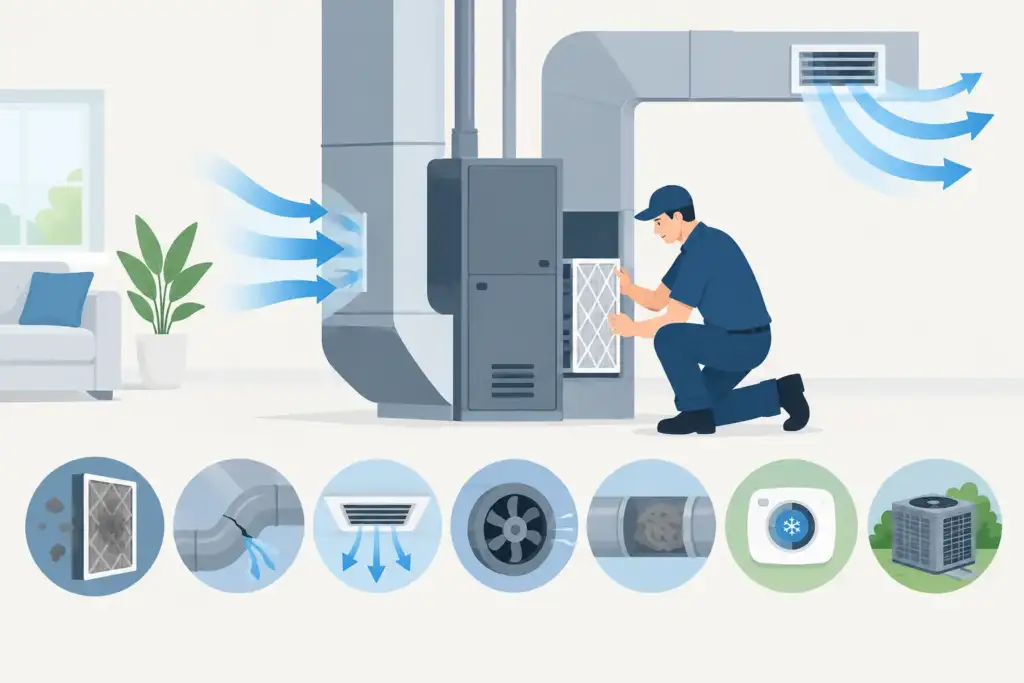
A bedroom that stays warm while the rest of the house feels comfortable is more than a minor annoyance. Weak air from one register, dusty vents, rising utility bills, and a system that seems to run nonstop can all point to HVAC airflow problems. In Northern Virginia, Washington, D.C., and Maryland, where homes depend on both heating and cooling through changing seasons, restricted airflow can make comfort harder to maintain and put extra strain on the equipment.
Some airflow issues have simple homeowner fixes. Others begin inside ductwork, at the blower, or in a part of the system that needs a trained HVAC technician. The key is recognizing the warning signs early and avoiding quick fixes that create a bigger problem.
What HVAC Airflow Problems Look Like at Home
Airflow is the amount of conditioned air moving from your heating and cooling equipment through supply ducts and into each room. When that movement is restricted, your system may still produce heated or cooled air, but it cannot distribute it where it is needed.
You may notice one or more rooms that are consistently too hot or too cold. Registers may blow lightly compared with others in the home, or the air may have a stale, dusty smell when the system starts. Some homeowners hear whistling near vents, rattling from ducts, or louder-than-usual blower operation. In more serious cases, the HVAC system runs for long cycles but never reaches the thermostat setting.
These signs do not always mean the same thing. A closed damper, a clogged filter, a disconnected duct, and an undersized return can all affect comfort differently. That is why a careful inspection matters more than guessing.
1. A Dirty or Overdue Air Filter
The air filter is often the first place to look. Its job is to capture dust, pet hair, and airborne particles before they reach the HVAC equipment. Once it becomes loaded with debris, less air can pass through it. The blower has to work harder, and rooms farthest from the system often feel the difference first.
Check the filter monthly during periods of heavy heating or air-conditioning use. Many homes need a replacement every one to three months, although pets, renovations, allergies, and frequent system use can shorten that schedule. Use the filter size and rating recommended for your equipment. A very high-density filter may catch finer particles, but if the system was not designed for it, it can also restrict airflow.
2. Closed Registers, Blocked Returns, or Damper Issues
It is tempting to close vents in unused rooms to save energy. In most homes, that approach does not work as expected. Closing too many supply registers changes the balance of the system and can increase pressure in the ducts. It may leave other rooms uncomfortable and place added stress on the blower.
Furniture, rugs, curtains, and storage boxes can also block supply registers or return grilles. Return vents are especially important because they pull household air back to the system to be conditioned again. Keep them clear, and make sure interior doors are not preventing air from returning properly when rooms are closed.
Some duct systems have manual dampers that direct airflow to different areas. A damper that was moved accidentally, left in a seasonal position, or installed incorrectly can reduce airflow to part of the house. Locating and adjusting dampers is best handled carefully, particularly in an attic, crawlspace, or tight utility area.
3. Dust and Debris Inside Ductwork
Ducts naturally collect dust over time. Homes with shedding pets, recent construction, smokers, heavy indoor dust, or a long gap between maintenance visits may see more buildup. If dust, debris, or a foreign object restricts a branch duct or register boot, air may not reach the room with normal force.
Professional air duct cleaning can help when there is visible buildup, debris from remodeling, pest-related contamination, or dust that repeatedly blows from vents. It can also support cleaner indoor air and help restore airflow when debris is a genuine restriction. However, duct cleaning is not a cure for every comfort concern. It will not repair a failing blower motor, correct poorly designed ducts, or solve refrigerant and thermostat issues. A trustworthy provider should explain what the inspection shows rather than promise that one service fixes every HVAC concern.
At Delight Home Air Cleaning, technicians use professional equipment and provide before-and-after visual documentation so homeowners can see the condition of accessible ductwork and the work completed.
4. Leaking, Crushed, or Disconnected Ducts
Ductwork in attics, crawlspaces, basements, and garages can develop leaks at connections. Flexible duct can sag, become crushed, or tear. In some cases, a duct has partially or fully disconnected, sending conditioned air into an unoccupied space instead of the room you want to cool or heat.
This problem often shows up as a stubborn hot or cold room, particularly on an upper floor. You may also notice higher energy bills because the system is conditioning spaces it does not need to serve. Duct sealing or repair is generally an HVAC job, especially if the issue involves insulation, accessible connections, or a larger design problem.
Do not rely on ordinary cloth duct tape for a permanent repair. Despite the name, it commonly fails under heat and age. Proper materials and correct installation make a real difference.
5. An Undersized Return Air Path
Supply vents deliver conditioned air, but the system also needs enough return airflow to keep the cycle moving. A home may have plenty of supply registers yet still feel uneven if there are too few return grilles, undersized return ducts, or blocked pathways between rooms and central returns.
This is common in additions, finished basements, and homes where room layouts have changed. A closed bedroom door can create pressure differences if there is no adequate return path. The result may be weak supply airflow, door movement, or a room that becomes stuffy overnight.
An HVAC contractor can measure static pressure and evaluate whether the return side of the system is properly sized. This is more technical than a basic vent cleaning, but it is worth investigating when the same comfort problem continues after filters, registers, and visible obstructions have been addressed.
6. Blower, Coil, or Equipment Problems
Not every airflow restriction is in the ducts. The blower assembly moves air through the system, and a dirty blower wheel, failing capacitor, worn motor, or incorrect speed setting can reduce performance. A dirty evaporator coil can also restrict airflow, especially if filter changes have been neglected.
Warning signs include ice on refrigerant lines, very weak airflow throughout the house, unusual mechanical noises, or a system that shuts down unexpectedly. Turn the system off and contact a qualified HVAC professional if you see icing or smell anything burning. Continuing to run an impaired system can cause more damage.
Regular HVAC maintenance is the best defense here. A seasonal service visit gives a technician the opportunity to check electrical components, coils, drainage, refrigerant-related symptoms, and blower performance before a small problem becomes an expensive repair.
7. Duct Design That Does Not Match the Home
Sometimes the system is working as designed, but the design itself is no longer adequate. Older homes may have ductwork sized for a different furnace or air conditioner. A home addition may have increased the conditioned square footage without adding proper ducts or returns. Long duct runs, too many bends, and poorly insulated ducts can all reduce delivery to distant rooms.
The trade-off is that design corrections can cost more than routine maintenance. Still, targeted improvements such as adding a return, repairing a restrictive section, insulating ducts, or balancing airflow may be more effective than replacing equipment that is otherwise in good condition. A professional assessment helps identify whether the issue is maintenance-related or structural.
What You Can Check Before Scheduling Service
Start with the simple, safe steps. Replace a dirty filter, confirm that supply registers are open, clear furniture away from returns, and look for obvious damage around accessible vents. Notice whether the issue affects one room, one floor, or the entire home. That information helps a technician narrow down the likely cause.
Avoid opening sealed equipment panels, reaching into ductwork, or trying to clean coils yourself. You can damage components, disturb wiring, or miss the underlying issue. If airflow is suddenly weak throughout the home, the system is icing up, or you notice burning odors or repeated shutdowns, schedule HVAC service promptly.
For homes with visible duct dust, post-renovation debris, stale vent odors, or concerns about cleaner indoor air, a professional duct inspection and cleaning can be a practical part of the solution. Ask for clear pricing and visual proof of the work, then pair duct cleaning with regular filter changes and HVAC maintenance for the best long-term results.
A comfortable home should not require turning the thermostat lower and lower just to feel air in the next room. Addressing airflow early can protect your equipment, improve day-to-day comfort, and help your household breathe easier.